|
|
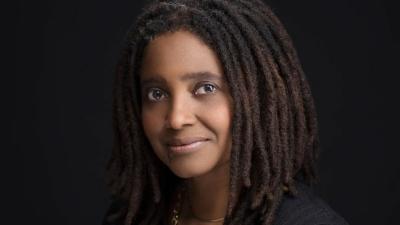
Dr. X. George Xu |
|
I have taught several
undergraduate courses: Radiological Engineering, Nuclear Instrumentation and
Measurement, Physics of Radiology, and Introduction to Engineering Design. I
also taught graduate topics of special interests: radiation dosimetry, image processing and visualization,
radiotherapy, virtual-reality authoring, and Monte Carlo methods. A list of
courses is here. My core research
activities involve people in the Rensselaer
Radiation Measurements and Dosimetry Group (RRMDG), its website contains detailed info about
projects, papers, and members. In general, we are interested in experimental
and computational methods for measuring and quantifying ionizing radiation in
the human body, environment, or nuclear system. We have developed models of complex
systems such as electron and proton accelerators, CT/PET scanners and nuclear
power reactors. While working on
my PhD in early 1990s at Texas A&M University,
I was one of a group of researchers who developed the two-dosimeter algorithm
for the U.S. nuclear power industry.
Later at RPI, we pioneered a number of innovative methods in
developing computational phantoms that represent workers and patients
realistically (most notably VIP-Man, RPI Pregnant Women, RPI Adult Male and
Female). Monte Carlo radiation transport simulations using production codes
such as MCNP, MCNPX, EGS, and Geant4 are integral to our research. Most of our 130 peer-reviewed journal
papers and 190 conference abstracts, as of December 2010, can be categorized
into such fields as Health Physics (Radiation and Nuclear Safety), Medical
Physics (Radiology and Radiotherapy), Nuclear Detection, Nuclear Power and
Reactor Physics, and Computational Methods. A few publications and patents
with other groups have covered additional topics: ultrasound imaging, finite
element analysis, terahertz sensing, carbon nanotubes,
proton radiography, image optimization using electronic observers, CT/PET
dose optimization, nuclear and asbestos contamination, second cancer after
radiotherapy, cancer stem cells, GPU parallel
computing and acceleration for Monte Carlo simulation, and compressive
sensing. I always think that software is critical in translating research to
practice and we have devoted a lot of time testing and releasing some of the
software packages we wrote. In the future we will likely continue to be
attracted to new and exciting ideas that address important real-world
problems. During my sabbatical leave in Boston 2009-2010, I attended probably
100+ seminars and lectures, among them are two given by Ray Kurzweil,
author of The Age of Spiritual Machines
and The Singularity is Near. I have
learned from him that people tend to think linearly but technologies advance
exponentially. Some research
proposals I wrote were funded by NSF, DOE, NIH, NIST and EPRI totaling close to $12 million. I mostly served as the principal
investigator, in many cases working with multiple co-investigators from
university, hospital or national lab. By the summer of 2012, 15 Ph.D. and 10
M.S. students have graduated from our group at RPI. I have also mentored many
undergraduate students who took my advices seriously. It has been
tremendously gratifying for me to work with every one of them, and later to
maintain communication and even to collaborate with a few over the years. Apart from
teaching and research, I have been active in professional societies, serving
as a member of various technical committees of ANS,
AAPM, ASTRO, CIRMS, HPS, ICRP, and NCRP. My role as president of CIRMS
in 1999 allowed me to make contributions to ionizing radiation measurement
and standardization at the national level working closely with leaders from
the NIST, universities, industry, and government.
In 2005, I co-founded the International
Consortium of Computational Human Phantoms and initiated a project that
led to <<Handbook
of Anatomical Modeling for Radiation Dosimetry>>.
Published in 2009 after two years of efforts by 60 authors from 13 countries,
the 30-chapter book
documents more than 50 years of history in this research field. In 2008, I was elected to a
6-year term as a council member of National Council of Radiation Protection
and Measurements (NCRP). In 2009, I was elected a
fellow of AAPM. Over the years, I organized and chaired many conference
sessions. I discovered that my
ideas were as good as or probably better than everyone else on the
committees. So, if you have an idea and are willing to volunteer, you will do
well in any professional committee. In 2011, I helped
organize The
Third International Workshop on Computational Phantoms for Radiation
Protection, Imaging and Radiotherapy at Tsinghua
University, Beijing, China, August 8 and 9, 2011. Currently, I am
involved in organizing several international conferences: World Congress on
Medical Physics and Biomedical Engineering (WC2012) in Beijing in 2012, the 12th
International Conference on Radiation Shielding (ICRS-12) in Japan in 2012, and
the Supercomputing
in Nuclear Applications & Monte Carlo 2013 (SNA
+ MC 2013), Paris in 2013. It was always
wonderful to receive recognitions from peers and professional organizations:
nomination for the Discover Magazine Awards for Technological Innovation, NSF
Faculty CAREER Award, Rensselaer School of Engineering Excellence in Research
Award, American Nuclear Society Best-Paper Award, plus a lot of publicity
about our research. However, what made our group really proud are three papers in
the Physics in Medicine and Biology
Journal that were ranked among the 10-best
in 2007, the most-downloaded
in 2009 and the most-cited
in 2010, respectively. My
thoughts about research are perhaps best reflected in 80 invited talks I gave
over the years, some of the recent ones are listed below: - Plenary presentation, The 41st Annual National
Conference on Radiation Control: Advancing Radiation Protection in the 21st
Century, Hyatt Regency, Columbus, Ohio, May 18-21, 2009. Two-dosimeter
Algorithms for the Assessment of Effective Dose Equivalent," - Seminar,
Joint Program in Nuclear Medicine, Harvard Medical School, 8-9am, January 7,
2010. Recent
Progress on Computational Phantoms and Applications to Imaging and Therapy
- Seminar,
Department of Radiation Oncology, Massachusetts General Hospital, Boston,
January 12, 2010. Medical
Physics Research at RPI: A Journey in Search of the Next Big Thing - Plenary
presentation, 2010 American Nuclear Society, Joint RPSD,
IRD & BMD
International Topical Meeting, Palace Station Hotel & Casino, Las Vegas,
NV, April 19-23, 2010. Trends
in Radiation Protection Dosimetry: The New ICRP-103
Algorithms and Computational Phantoms - Invited
presentation, Continuous Education Course: New Internal Dose Models –
Evaluation and Impact, Society of Nuclear Medicine (SNM)
Annual Meeting, Salt Lake City, Utah, June 5-9, 2010. New,
Realistic Models of the Adult Female in Pregnancy for Use in Dose Assessment
- Invited
presentation, Continuous Education Course: Dose Estimation and Reduction in
PET/CT Imaging, Society of Nuclear Medicine (SNM) Annual Meeting, Salt Lake City, Utah, June 5-9,
2010. Software
Tools for PET and CT Dose Calculations - Plenary
presentation, The Joint International Conference of the 7th Supercomputing in
Nuclear Application and the 3rd Monte Carlo (SNA +
MC2010), Tokyo, Japan, October 17-21, 2010. |
|
|
Detailed CV Research
Group Personal Pictures
Student Pictures
|
|
|
Last updated June 2012 |
|