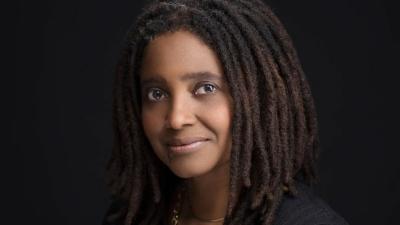
John B. Brunski, Ph.D.

   Professor, Biomedical Engineering


Educational Initiatives

Undergraduate Courses

Introduction to Engineering Analysis (IEA)
Taught: every Fall semester since Fall 1989 

The concept of IEA was originally conceived by Paul M. DeRusso, who was an Associate Dean of Engineering in the late 1980s.  He wanted to give first-semester engineering students from all disciplines an early taste of what engineering is about.  Designed with input from a number of faculty collaborators besides Dr. Brunski (including G. Habetler, D. Lagoudas, M. Darlow, R.L. Spilker, J. Wen and T-L Sham) and graduate students (J. Porter, R. Michaloski, and K. Haberstroh), IEA presents first-year engineering students with an integrated combination of Newtonian statics, some aspects of linear algebra, and laptop computing.  (IEA Homepage)  The course has evolved since 1989 with more than $250,000 of support from sources including the Rensselaer Center for Innovation in Undergraduate Education (CIUE), NSF, GTE Foundation, and Rensselaer's Strategic Initiatives Program. Dr. Brunski's leadership of this course was cited when he was part of a 10 person team of Rensselaer faculty that received the first Boeing Outstanding Educator Award in 1995. 

Biomaterials Content for 3 Courses:
Biomechanics, Tissue-Biomaterial Interactions, BME Lab

A few years ago, as part of the new 4 x 4 curriculum at Rensselaer, the BME department decided to delete the stand-alone Biomaterials course and insert a number of its case studies into the three course listed above, which were each increased in credit hours.  As the former teacher of Biomaterials, Dr. Brunski has been coordinating the use of case studies in these courses above. 
 

Graduate Courses


Biomechanics of Soft Tissues
Taught: Fall, odd-numbered years 

This is a graduate course designed to explore the structure and mechanical behavior of soft tissues with high collagen content, such as tendons, ligaments, skin, cartilage, and blood vessel walls.  Concepts of stress and strain are developed and then used in developing constitutive models such as hyperelasticity, linear and quasilinear viscoeleasticity, and biphasic theory. 

Biomechanics of Hard Tissues
Taught: Fall, even numbered years 

A graduate course that discusses the structure and properties of hard connective tissues, this course mainly deals with lamellar, woven, plexiform, dense and cancellous bone.  Isotropic and anisotropic models of bone are reviewed as well as bone behavior in yielding, fracture and fatigue.  Concepts of bone biology, especially bone modeling and remodeling, are discussed throughout. 

Other Educational Projects, Modules, Etc.

Dr. Brunski has been leading the development of something called the Bike Module. Click here to go to the IEA homepage and a link to the Bike Module.  Comprised mainly of a set of interactive java applets, the Bike Module allows the user to explore many concepts of mechanics, linear algebra and computing as they relate to design and operation of a bicycle.  The Bike Module is one of several modules that have been developed under the aegis of NSF's Project Links.• 


Welcome · Biographical Sketch · Research · Publications · Educational Initiatives · Downloads · Contact · Biomedical Engineering Home Page